Improved Clinch Knot
Quick Answer
To tie an Improved Clinch Knot, thread the line through the hook eye, wrap the tag end around the standing line 5-7 times, pass the tag end through the small loop near the eye, then back through the large loop just created. Moisten and tighten. It retains about 85% line strength and is one of the easiest and most popular fishing knots.
The Improved Clinch Knot is the most popular terminal connection used by anglers around the world. It provides a reliable, strong connection between your fishing line and hooks, lures, or swivels. This knot is an improvement on the basic Clinch Knot, adding an extra tuck that prevents the knot from slipping under load.
How to Tie the Improved Clinch Knot
Step-by-Step Diagram
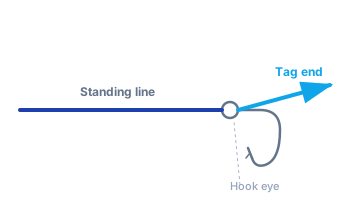
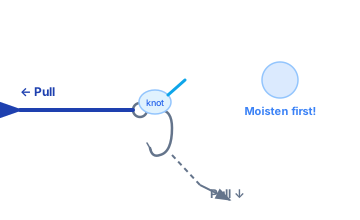
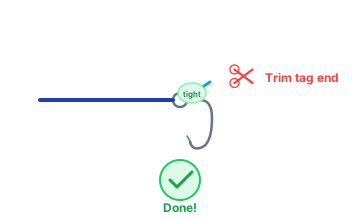
- Thread the line through the eye of the hook, lure, or swivel. Pull about 6 inches of tag end through.
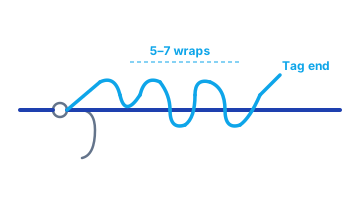
- Wrap the tag end around the standing line 5 to 7 times. Use 5 wraps for heavier line, 7 for lighter line.
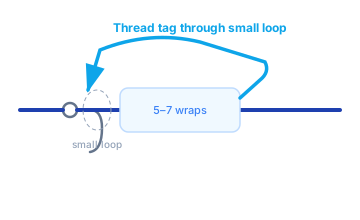
- Thread the tag end through the small loop formed just above the eye of the hook.
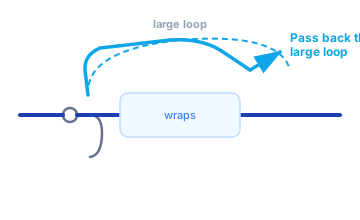
- Pass the tag end back through the large loop you just created by the previous step.
- Moisten the knot with saliva or water to reduce friction and heat.
- Pull the standing line slowly to tighten the knot against the hook eye. Trim the tag end close.
When to Use This Knot
The Improved Clinch Knot excels in freshwater fishing situations where you need a quick, reliable connection. It works best with monofilament and fluorocarbon lines up to about 20-pound test. For heavier lines or braided line, consider the Palomar or Uni Knot instead.
- Trout fishing with light tackle
- Panfish and crappie setups
- General freshwater hook-and-line rigs
- Attaching swivels and snap swivels
Pro Tips
- Always moisten the knot before tightening — dry knots weaken the line through friction heat
- Use 5 wraps for lines over 15-pound test, 7 wraps for lighter lines
- Make sure the wraps are tight and don’t overlap each other
- This knot is not recommended for braided line — it will slip
Pros and Cons
Pros:
- Extremely easy to tie, even in cold or wet conditions
- Reliable strength with monofilament and fluorocarbon
- Quick to tie on the water
- One of the most well-known knots in fishing
Cons:
- Not reliable with braided line
- Loses strength with lines over 25-pound test
- Slightly weaker than the Palomar Knot
- Can be difficult with very small hook eyes