Palomar Knot
Quick Answer
To tie a Palomar Knot, double 6 inches of line and pass the loop through the hook eye, tie an overhand knot with the doubled line, pass the hook through the loop, then moisten and tighten. It retains about 95% line strength and works with all line types including braid.
The Palomar Knot is widely considered the strongest and most dependable terminal connection knot in fishing. Its doubled-line design distributes stress evenly, making it exceptionally resistant to failure. It is one of the few knots that works equally well with monofilament, fluorocarbon, and braided line.
How to Tie the Palomar Knot
Step-by-Step Diagram
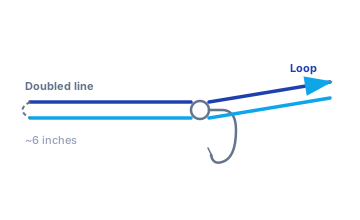
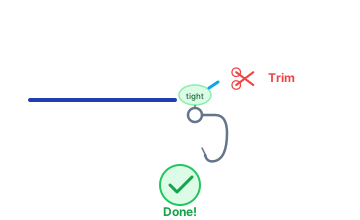
- Double about 6 inches of line and pass the loop through the eye of the hook or lure.
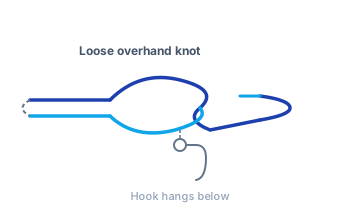
- Tie a loose overhand knot with the doubled line, letting the hook hang below.
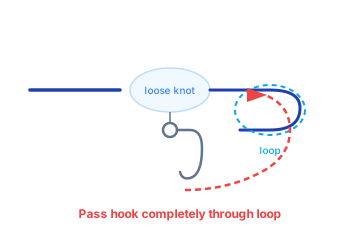
- Pass the hook or lure completely through the loop of doubled line.
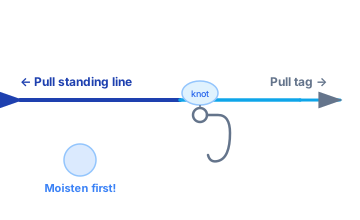
- Moisten the knot and pull both ends of the line to draw the knot tight.
- Trim the tag end close to the knot.
When to Use This Knot
The Palomar is the go-to knot when strength is your top priority. It shines with braided line where many other knots slip. Use it for bass fishing, heavy cover situations, and anytime you cannot afford a knot failure.
- Bass fishing with braided line
- Heavy cover flipping and pitching
- Attaching hooks to fluorocarbon leaders
- Any situation where maximum knot strength is required
Pro Tips
- Make sure the loop passes completely over the hook — a partial pass will weaken the knot
- The doubled line through the hook eye can be tricky with small eyes — use a loop threader
- This is one of the best knots for super braid lines
- Keep the overhand knot loose until you pass the hook through
Pros and Cons
Pros:
- One of the strongest fishing knots (~95% line strength)
- Works with all line types including braided
- Simple and fast to tie
- Very consistent — hard to tie incorrectly
Cons:
- Uses more line than single-line knots
- Difficult with very small hook eyes due to doubled line
- Can be awkward with large lures or treble hooks
- The loop must clear the entire lure/hook